YOKABIO
Abstract
A single cell has limited functions, and cells communicate with one another to carry out more complex functions. Each cell connects to particular partners and exchanges materials with them. This communication is the basis of living systems.
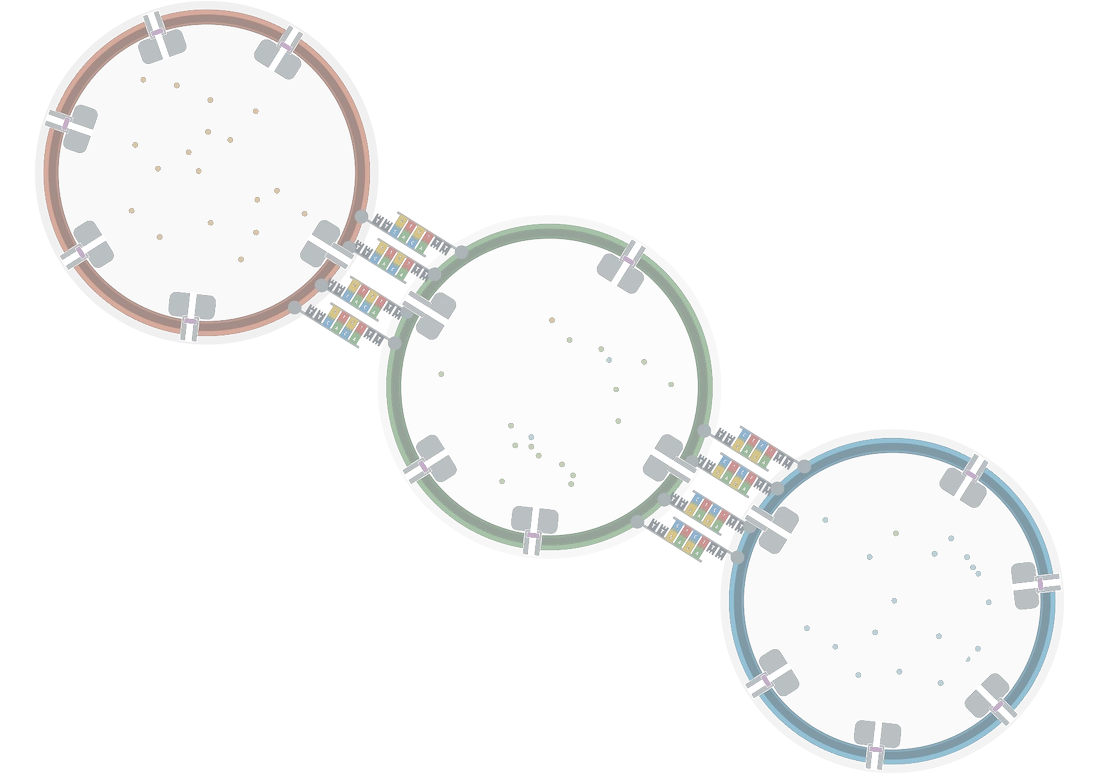
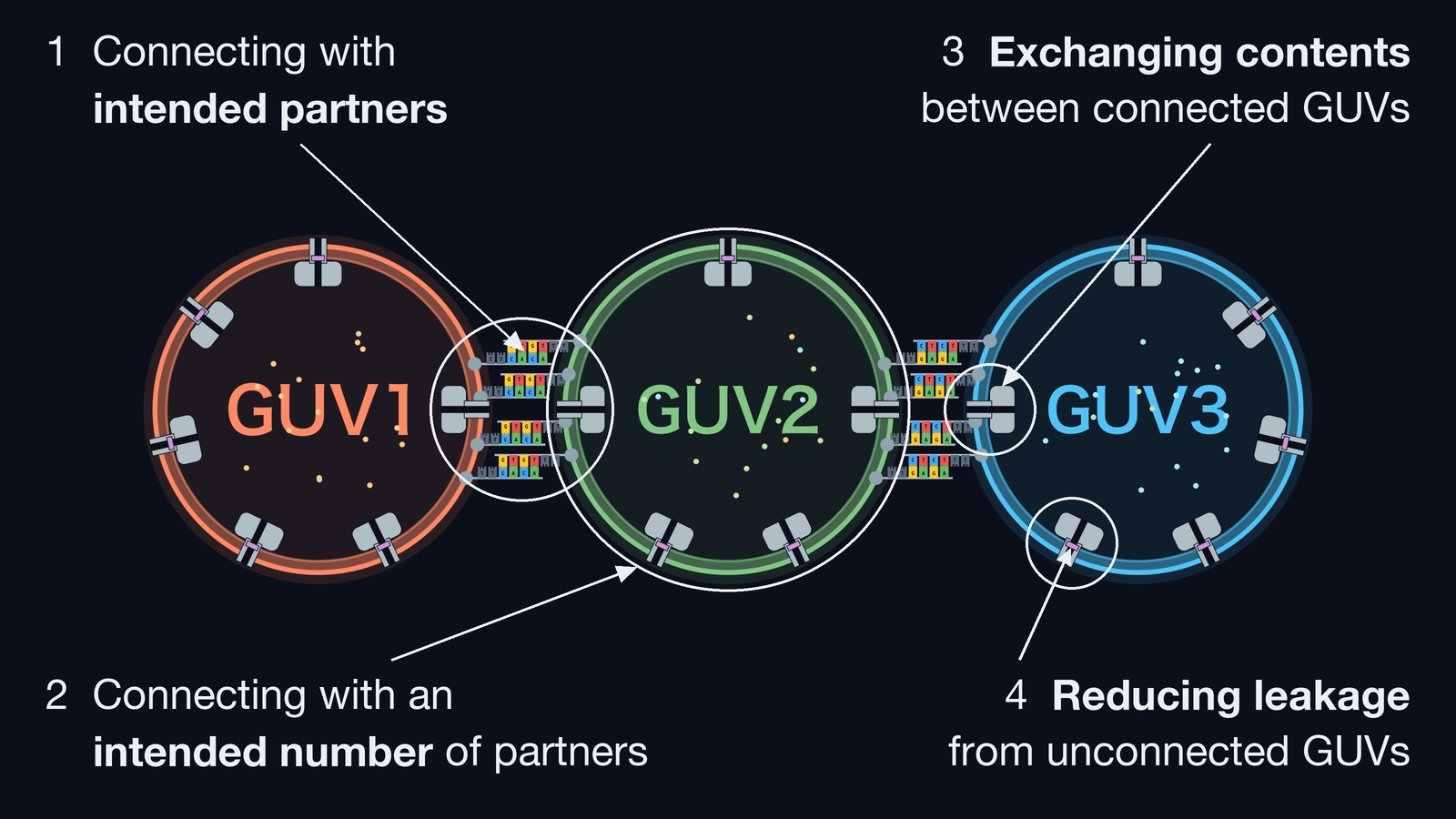
Our project is ALiGN (Accurately Linkable GUV Network). We build a network of GUVs, small vesicles that resemble cells, and aim for controlled communication between GUVs. Each GUV connects with intended partners, in an intended number, and exchanges its contents only through these connections.
To control the connections, we place DNA strands on the GUV surface. The difference in sequences decides which GUVs connect to each other. The DNA density on the surface of each GUV and the strength of the DNA binding decide how many partners it takes. For material exchange, α-hemolysin opens pores in the membrane, and TRIMEB keeps the pores closed until two GUVs are connected.
By combining these pieces, we build an artificial network modeled on cell-to-cell networks.
Youtube Video
Acknowledgements
We would like to express our sincere gratitude for the financial support provided to YOKABIO 2026 through the following programs:
- Kyutech Project for Promotion of Education
- University Support Subsidy from Iizuka City
- Young Academy of Engineering Grant, Kyushu Institute of Technology
- Kyushu Institute of Technology Giving Campaign 2026
We sincerely appreciate the generous support we have received for our research activities and participation in BIOMOD 2026.